
How to Check Criminal History in Carter County
No single screen contains a complete Carter County criminal record. Start with the question the record must answer. The Carter County inmate roster addresses current custody. The Circuit Court Clerk supplies General Sessions and Criminal Court dockets. The Tennessee Bureau of Investigation compiles fingerprint-supported state history, while the Tennessee Department of Correction covers its own prison and supervision population. A careful search matches the office to the event instead of treating one blank result as final.
Collect the full name, an approximate arrest or filing year, the event location, and any case, report, or inmate number. Former names can matter when reviewing one's own files, though the public TORIS match does not include aliases. Common names need more care. Compare dates and identifiers, and ask for the register of actions before paying for many court pages.
- Search the Carter County roster for current detention or a recent booking.
- Call the Circuit Court Clerk and ask whether the matter is in General Sessions, Criminal Court, or an archive.
- Request the incident or arrest report from the sheriff, city police department, or state agency that created it.
- Order a TORIS check when broader Tennessee repository coverage is needed.
- Use FOIL for TDOC custody or supervision and Public Case History only for an appeal.
No Single Carter Criminal Search
Carter County criminal history is split because each stage creates a new file. An officer writes the incident and arrest report. The jail records intake and custody. General Sessions opens the first court record, and Criminal Court receives an indicted felony. TBI receives qualifying fingerprint submissions and later disposition data. TDOC adds a separate record if a sentence enters state custody or felony supervision.
The sequence is best read as a record trail: Arresting agency → Carter jail → General Sessions Court → Criminal Court → TBI or TDOC. A charge may change at each point. The booking label is not necessarily the indictment, and the indictment is not necessarily the conviction. The official Carter County Sheriff's Office homepage shows the local entry point for sheriff services.
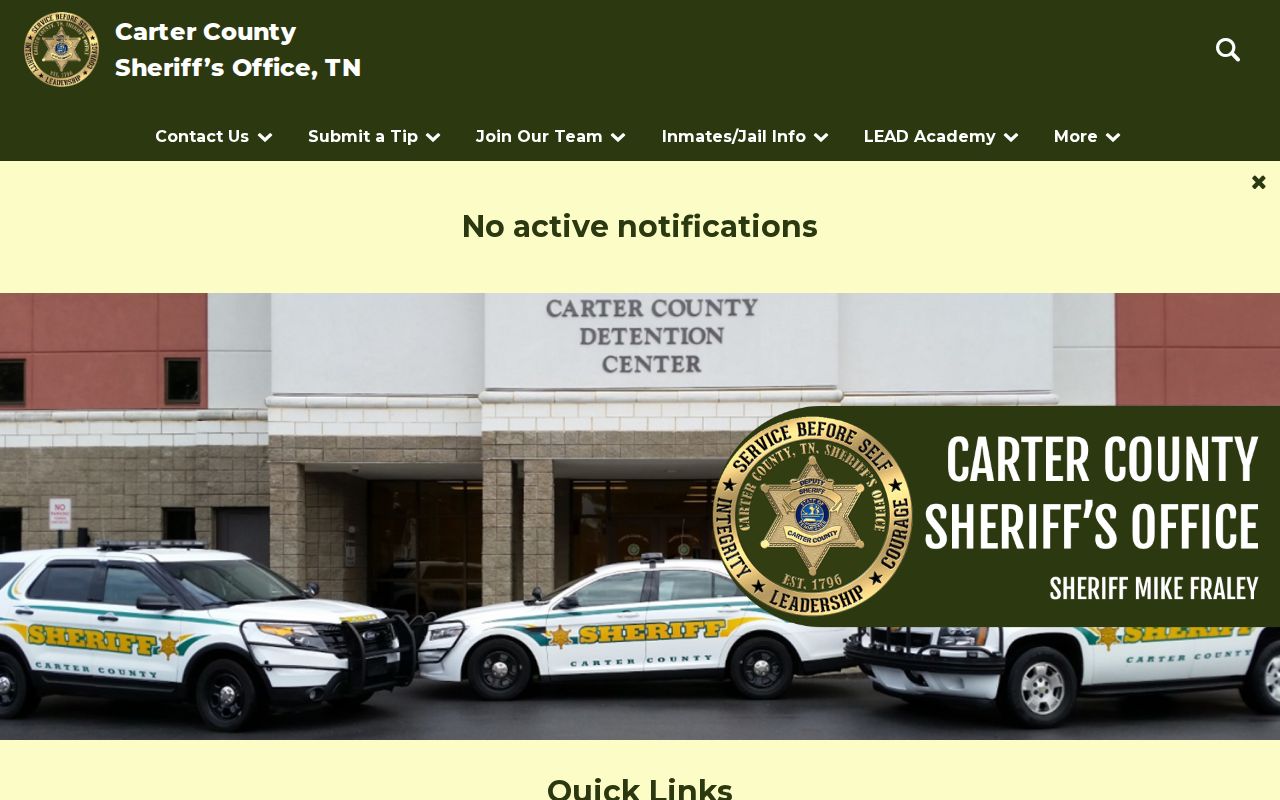
The sheriff image identifies the correct Tennessee office, which helps avoid same-name Carter County sites in other states.
Official Tennessee Background Checks
The Tennessee Bureau of Investigation is the central criminal-history repository. Its official background-check guidance separates name-based and fingerprint-supported routes. TORIS is the public name-check product. It searches Tennessee data tied to fingerprint submissions, costs $29 per request, and is nonrefundable. It omits aliases from its returned match process and excludes juvenile material unless the person was transferred for adult prosecution.
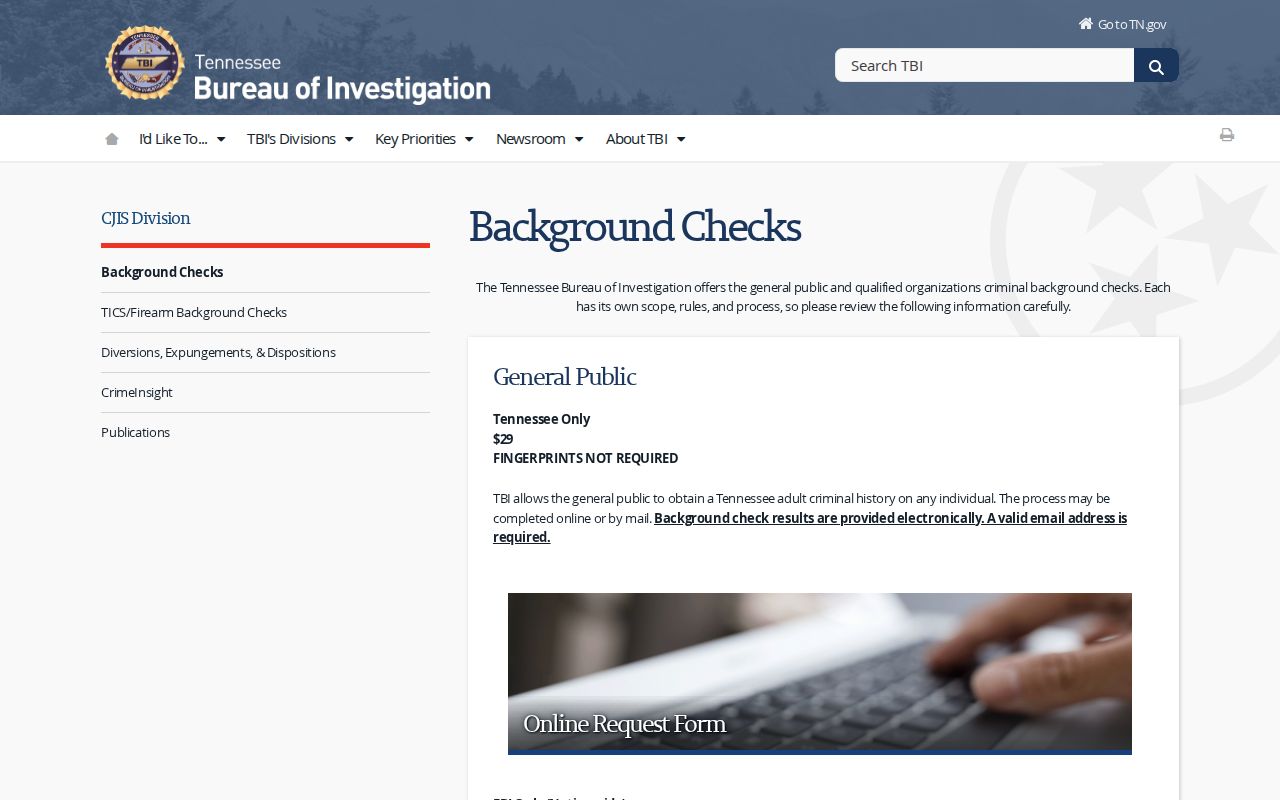
The TBI page is the right place to confirm which official product fits a self-review or other authorized purpose before payment.
Authorized fingerprint transactions generally begin with the requesting program's instructions and service code, followed by an IdentoGO by IDEMIA appointment. No permanent enrollment site inside Carter County was confirmed in the research. Enter a Carter County ZIP code and use the live locator. For a subject's own federal record, the FBI Identity History Summary is a separate fingerprint process.
Inside the Carter TORIS Check
Tennessee Open Records Information Services offers a credit-card path and an account path. Credit-card customers can use Visa, MasterCard, or Discover. Existing billable accounts use a username and password. The paid request continues to identifying fields after the customer selects the order path, so labels not exposed on the public landing screen should not be guessed.
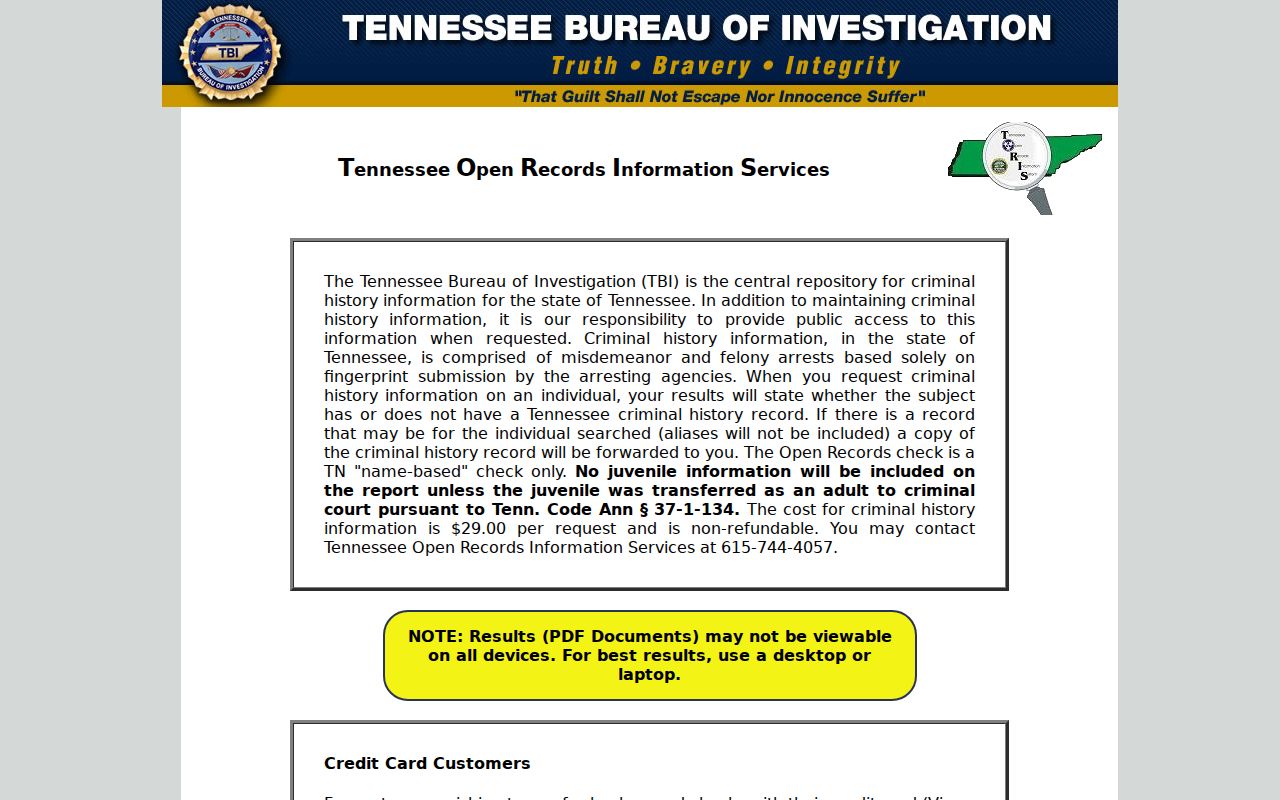
The captured portal view shows why a desktop or laptop is useful: TBI notes that PDF results may not display on every device.
| Control | Use | Limit |
|---|---|---|
| Credit Card Customers | Starts a $29 name check | Nonrefundable |
| Billable username | Existing account access | Account required |
| Password | Secures account login | Not used for card orders |
Types of Criminal Records
Carter County record types are defined by who made them and what event they capture. An incident report describes an investigated event. An arrest report records the asserted legal basis for custody. A booking card confirms jail processing. The clerk's docket records filed charges and court action, while a TBI history compiles qualifying fingerprint cycles and reported outcomes.
Other records answer narrower questions. A warrant comes from a court and is served by law enforcement. Probation appears in the sentence and later revocation docket, while TDOC Community Supervision holds detailed state supervision records. The Tennessee Board of Parole makes parole decisions. A registry listing is published by TBI under its own statutory system.
- Police and sheriff files: incident narratives, arrest reports, evidence references, and agency supplements.
- Jail records: booking time, inmate ID, current roster status, descriptors, and charge entries.
- Court files: affidavits, indictments, motions, judgments, sentences, and later orders.
- State records: TBI history, TDOC custody or supervision, parole proceedings, and registry data.
- Federal records: PACER dockets and federal prison records, kept outside the county system.
Carter County Roster Records
The official roster is both a current inmate lookup and Carter County's closest official recent-booking display. Its live box is labeled “Type to Search.” A roster card can show a photo, display name, inmate ID, height, weight, gender, race, age, eye and hair color, and a booked date and time. “View Charges” opens the listed booking allegations, while “Notify Me of Status Change” starts the notification route.
A roster entry proves current displayed custody and booking, not guilt. A person who leaves the list may have bonded out, been released, or transferred. The roster does not explain the court outcome. Call the jail at 423-542-1855 when a recent booking is missing, request an older booking sheet from sheriff records, and ask the Circuit Court Clerk for the disposition.
| Type to Search | Filters current cards with a name fragment. |
|---|---|
| View Charges | Shows booking charge detail, which remains an allegation. |
| Inmate ID | Identifies the jail record; preserve any leading zeroes. |
| Status notice | Offers custody-change notification, not a certified disposition. |
Note: Card timestamps may use UTC while the booked field shows EDT, so compare the labels before reporting a time difference.
What a Carter County Criminal Record Shows
A complete Carter County criminal record can carry several identifiers for the same event. The jail uses an inmate ID. The clerk uses a docket number. TBI links a fingerprint transaction to state and federal identifiers when applicable. Charge wording can also change from the arrest report to the affidavit, indictment, plea, and judgment.
| Name & Identifiers | Reported name, aliases in repository data, birth information, docket number, and inmate or agency identifiers. |
|---|---|
| Arrest / Booking Data | Agency, date, charge, custody time, photograph, fingerprints, holds, and release or bond fields when public. |
| Charges & Statutes | Alleged offense text, count, Tennessee statute, and offense class where stated. |
| Disposition | Dismissal, nolle prosequi, plea, verdict, acquittal, or other outcome for each count. |
| Sentence | Confinement, suspended time, probation, costs, fines, restitution, and sentence alignment. |
| Custody / Supervision | County detention, TDOC status, probation, parole, or revocation events in the proper source. |
Protected identifiers, juvenile information, victim data, medical details, and confidential investigative content can be removed from a public copy. Ask the custodian for the legal basis when a whole record or a portion is withheld.
Carter Criminal Records Change
A Carter arrest can produce five distinct records. The arresting agency describes probable cause. The detention center records the booking. General Sessions handles the first appearance, bond, and often a preliminary hearing. A grand-jury indictment sends a felony to Criminal Court. TBI then depends on fingerprint and disposition submissions to keep the state cycle current.
This explains common mismatches. Prosecutors may amend a charge. A grand jury may return no bill. A judge may dismiss a count, or a trial may end in acquittal. The booked charge can remain in an agency file even when the filed or final charge differs. For the strongest answer, compare each count and date rather than treating similar labels as identical.
- Disposition
- The outcome of a case or individual charge.
- Nolle prosequi
- A prosecutor's decision not to proceed on a charge at that time.
- Capias
- A court order directing custody, often tied to nonappearance or post-indictment action.
- Revocation
- A proceeding that may change or end community release after an alleged violation.
Public Access Laws
The Tennessee Public Records Act governs many state, county, and city records, but the correct custodian still matters. Tennessee agencies may request proof of state citizenship for this statutory route. Inspection is generally free. Copy and labor costs may follow an adopted schedule. When prompt production is not practical, the custodian has a seven-business-day response path to produce the record, cite a denial basis, or estimate production.
Key Carter County access rules:
T.C.A. §10-7-503 sets the TPRA inspection and response framework.
T.C.A. §10-7-504 identifies confidential public-record categories.
T.C.A. §38-6-120 supports TBI criminal-history dissemination.
Tennessee Supreme Court Rule 34 governs public access administration for court records.
The Office of Open Records Counsel publishes guidance when a records denial lacks a clear exemption.

That state resource helps readers separate an ordinary access delay from a denial based on a cited exception.
Two Carter Court Record Addresses
Official Tennessee court directories publish two Elk Avenue locations. The courthouse locator gives 801 E. Elk Avenue for Circuit, Criminal, and Chancery Courts. The clerk directory lists Circuit Court Clerk Johnny Blankenship at 900 E. Elk Avenue, Suite 906, with 423-542-1839 and blankenshipj@cartercountytn.gov. Call before travel and ask which entrance or suite now handles the criminal file.
The Tennessee courts' expungement resources also begin with the court that handled the case.
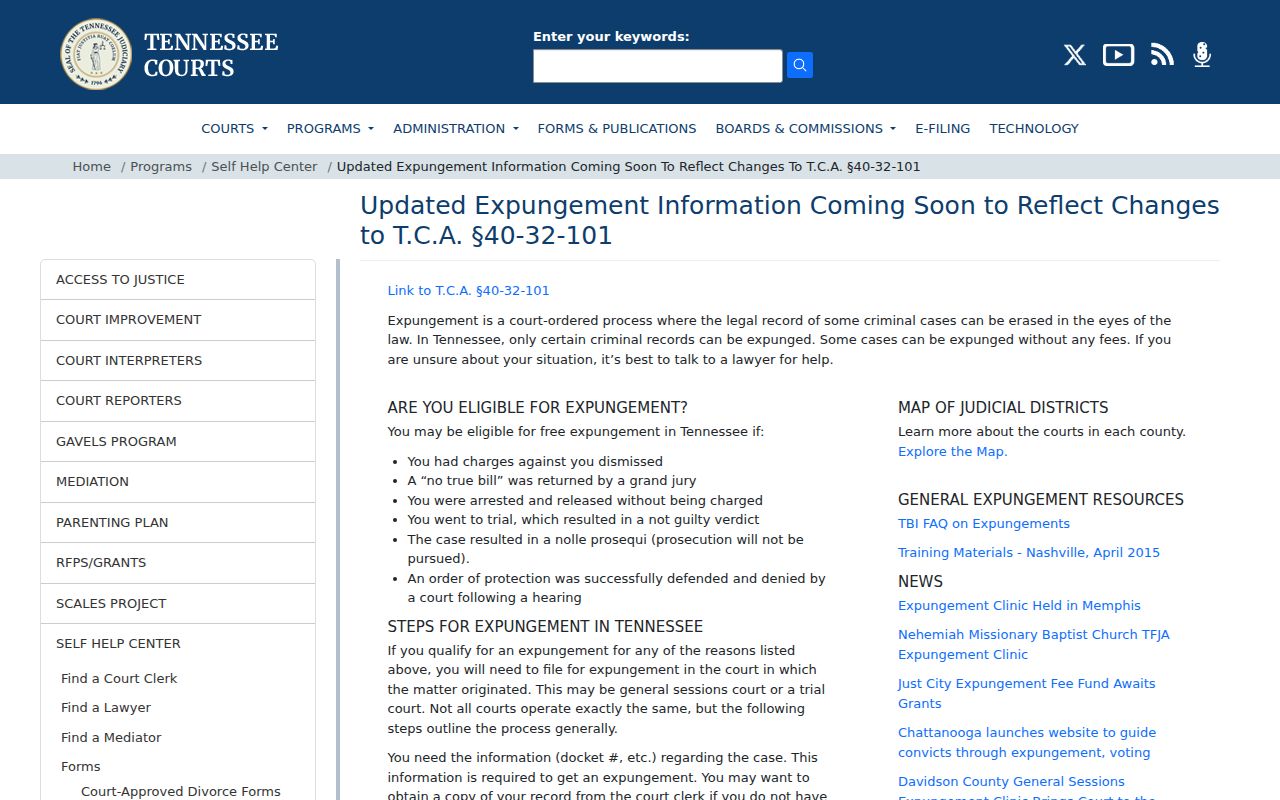
The court source reinforces a key local rule: get the Carter docket and disposition before asking TBI to process a granted order.
Circuit Court Clerk
900 E. Elk Ave., #906
Elizabethton, TN 37643
423-542-1839
Carter County Courts
801 E. Elk Ave.
Elizabethton, TN 37643
Confirm the current records entrance.
Sealed, Expunged & Restricted
Juvenile files, expunged matters, protected victim information, confidential law-enforcement intelligence, and private identifiers do not receive the same public access as an ordinary adult docket. A custodian may redact the protected part and release the rest. Courts and law enforcement can retain access where a statute or order permits it even after ordinary public access ends.
Expungement under T.C.A. §40-32-101 starts with the Carter County docket. Obtain the exact charge and disposition from the clerk, compare each count with current eligibility rules, and file the right Tennessee petition in the court that handled the case. Qualifying dismissals, acquittals, no bills, and certain uncharged arrests may be cleared without cost. Conviction relief is narrower, and the research did not confirm a single local fee for every filing.
After an order is granted, the clerk distributes it to affected agencies. TBI says it removes covered state charges and fingerprint material and sends the order through to FBI systems. Keep a certified copy. Then recheck both the local docket and a personal record review if an entry remains. A public-records request alone cannot clear a record.
Carter County Warrant Records
No verified public Carter County active-warrant database was found. The inmate roster is not a warrant search. Start with the Carter County Sheriff's Office, then contact the court or clerk that may have issued the warrant. A city citation or failure-to-appear matter may sit with Elizabethton or Johnson City Municipal Court, while Sessions and Criminal Court matters go through the Circuit Court Clerk.
Ask whether a public warrant or capias is recorded, which court issued it, whether bond was set, and what appearance or surrender instructions apply. Do not send funds to an unsolicited caller. Clearance may lag between a court docket and dispatch records, so confirm both systems after resolution.
For custody that moves beyond Carter jail, VINELink can provide participating custody notifications.
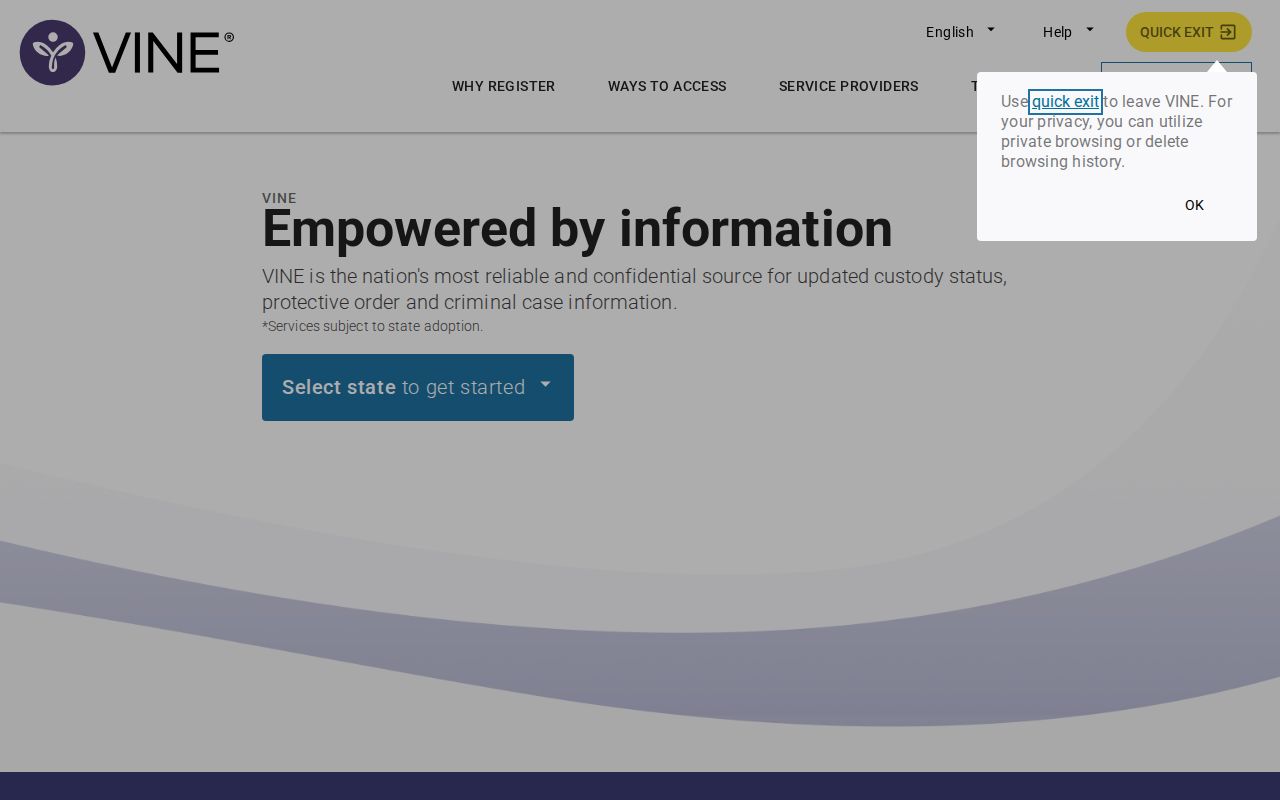
Notifications are useful for status changes, but they do not replace the clerk's certified case outcome.
Criminal Records by City in Carter County
City boundaries determine which police department created a report and can also determine the proper court. Johnson City crosses Carter, Washington, and Sullivan counties, so the incident address matters. Elizabethton is the Carter County seat and has its own police department and Municipal Court. Watauga is much smaller and often requires a city-first call to identify the responding agency before using the Carter County sheriff or clerk.
Johnson City Criminal History
71,046 citywide in 2020. Only part of the city is in Carter County.
Elizabethton Criminal History
14,546 in 2020. City police, Municipal Court, jail, and county clerk form separate channels.
Watauga Criminal History
364 citywide in 2020. Confirm the agency and county side before requesting a record.
The population figures come from the 2020 Census incorporated-place table. Johnson City's citywide number must never be treated as the population of its Carter County portion.
Carter County Records Geography
Carter County had 56,356 residents in the 2020 Census across about 341.3 square miles of land. Its records system spans Elizabethton's compact civic core and mountain communities near Roan Mountain, the Roan Highlands, and Cherokee National Forest. Travel on US 19E and State Route 67 can make an in-person clerk or sheriff visit a larger task during poor weather.
Geography also changes custody. A Tennessee Highway Patrol or Wildlife Resources Agency officer can create a state report even when Carter jail handles the booking. An Elizabethton officer keeps the city report, while the county clerk receives the resulting state prosecution. Use TBI CrimeInsight for official agency statistics, and keep incidents, offenses, arrests, and victims as distinct measures.
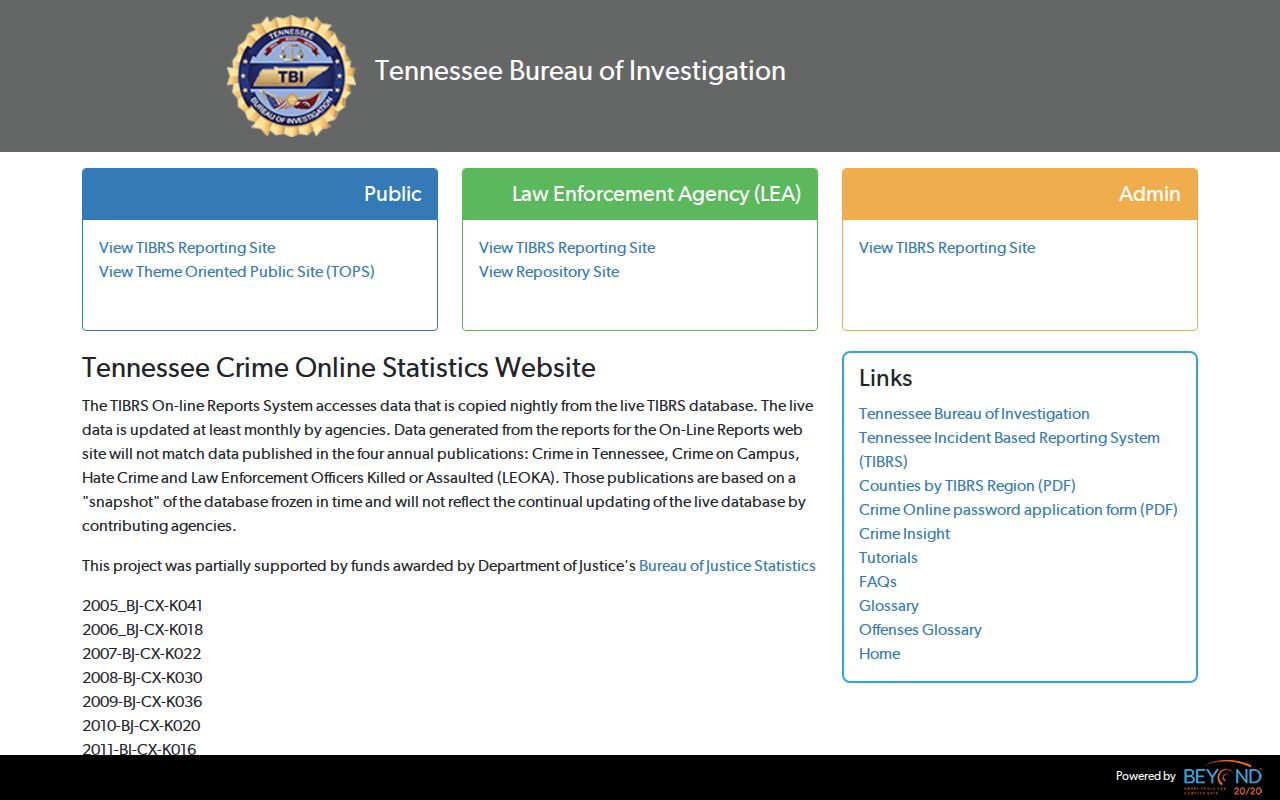
The portal supports agency and year filters, but Carter Sheriff's Office, Elizabethton Police, and Johnson City Police counts should not be merged without checking overlap and county allocation.
Federal cases sit outside this chain. Carter County is in the Eastern District of Tennessee, and federal dockets use PACER rather than the Carter clerk.
The Eastern District court site identifies the federal venue and official access points.
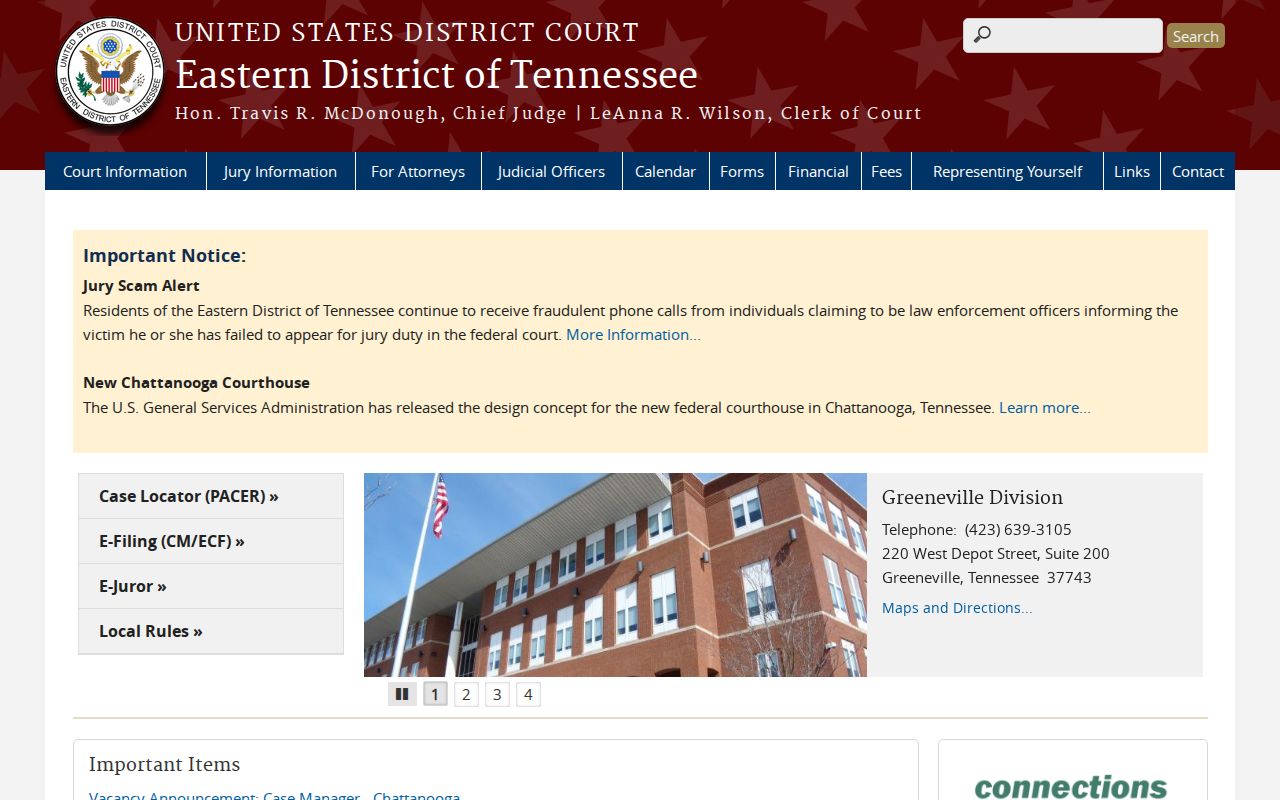
Federal prison custody belongs in the Bureau of Prisons locator, not the Carter roster or TDOC FOIL.